
The benefits of learning Bharatanatyam
Bharatanatyam is one of the oldest forms of Indian classical dance. For a child, it is also a training in strength, attention, expression and heritage — all at once. Here is what years of practice build, and what students go on to achieve.
By Kalika Nrityalay
Strength, balance and posture
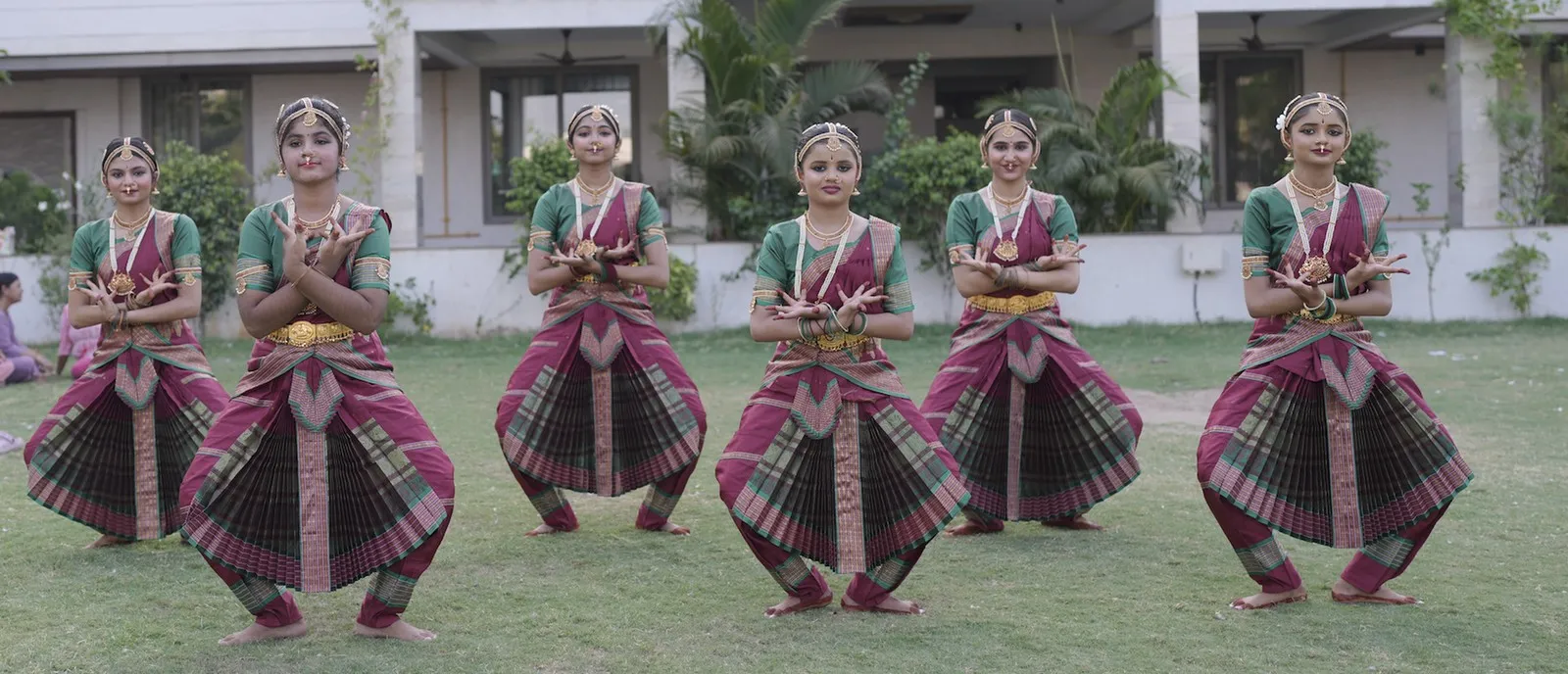
Every Bharatanatyam movement starts from aramandi. Before a child learns a single step, she learns to stand.
-
Leg and core strength
Aramandi is a deep, turned-out half-sit held while the upper body stays upright. Holding it through sequence after sequence works the thighs, hips and core in a way few children's activities do.
-
Posture
An upright spine, open chest and lifted head are corrected in every class until they stop being instructions and become habit.
-
Balance and coordination
The feet keep one rhythm while the hands form precise gestures and the eyes follow them. The whole body learns to work as one.
-
Stamina
Adavus are practised at three speeds, each twice as fast as the last. By the end of a class, children have done real exercise.
Focus, memory and rhythm
Bharatanatyam asks a child to hold many things in mind at once — and rewards her for it.
-
Concentration
Rhythm, footwork, hand gestures and gaze all have to be right at the same moment. There is no drifting through a class.
-
Memory
Children learn long sequences of adavus, and later whole pieces, and recall them in order — often to music, often from years before.
-
Rhythm and pattern
Steps are counted in cycles of beats, the tala, and recited as rhythmic syllables, the sollukattu. It is a training in timing that stays with a dancer.
-
Discipline and patience
Progress is measured in years. Children learn that practice, not talent alone, is what moves them forward.
Progress is measured in years — which is exactly the lesson.
Expression and confidence
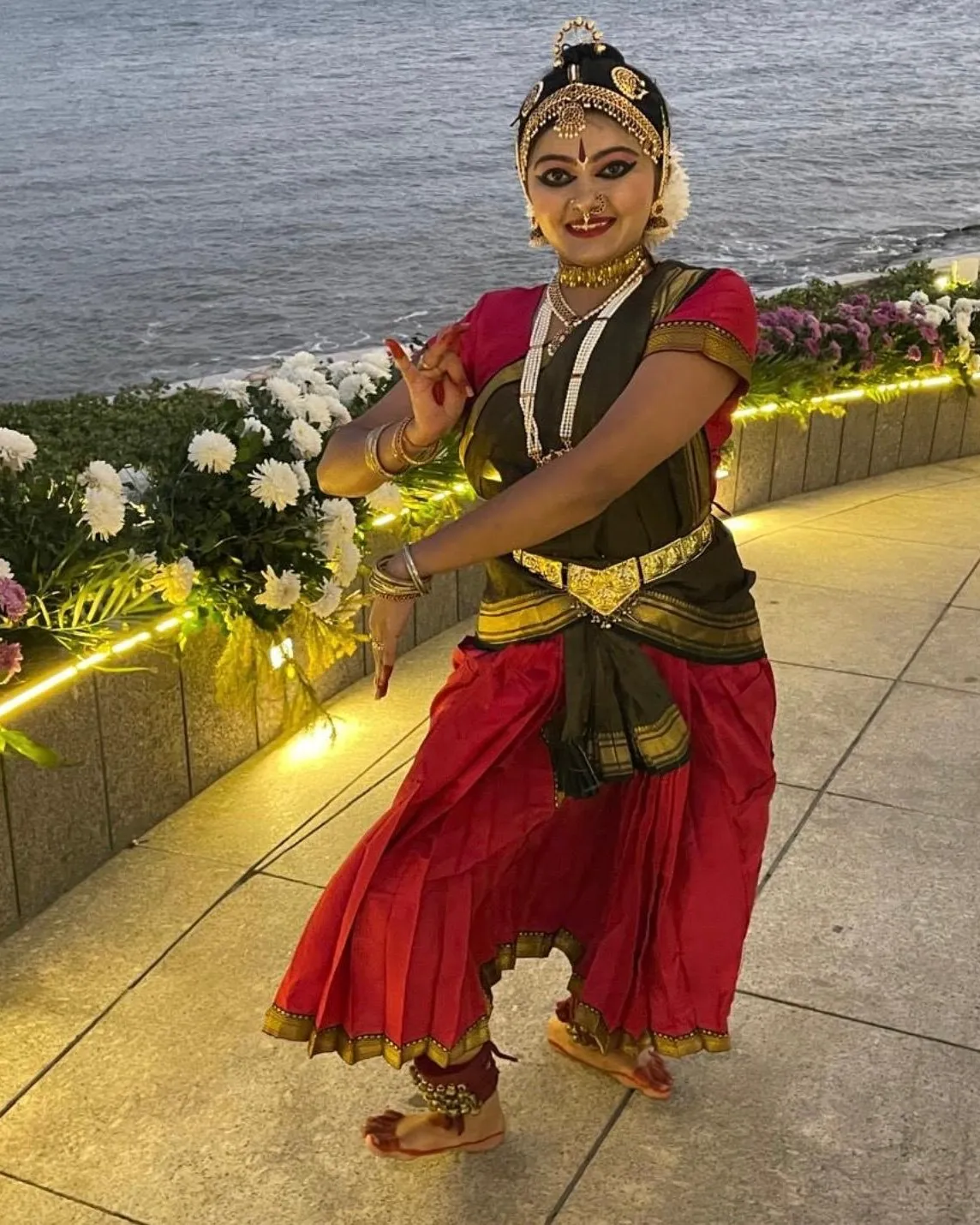
Bharatanatyam is storytelling. The body keeps the rhythm; the face and hands carry the story.
-
Reading and showing emotion
Alongside pure dance, nritta, is abhinaya: conveying a character or a feeling through the face, the eyes and the hands. Learning it means studying how emotions look — and finding them in yourself.
-
Hand gestures as a language
Each hasta can carry several meanings depending on context. Children learn a vocabulary, not just a set of shapes.
-
Stage presence
Dancing for family, and in time on stage, teaches a child to hold a room's attention without looking away.
-
Confidence that's earned
The confidence Bharatanatyam gives rests on a skill she has worked for — which is the kind that lasts.
A living connection to heritage
For many families — especially those raising children far from India — Bharatanatyam hands down far more than a dance.
-
Stories
Pieces draw on the epics and the Puranas. Children meet Krishna, Shiva, Rama and Sita through the dance, not a textbook.
-
Music and language
Bharatanatyam is danced to Carnatic music, with lyrics in Tamil, Telugu, Sanskrit and other languages. Children absorb far more than steps.
-
Namaskaram
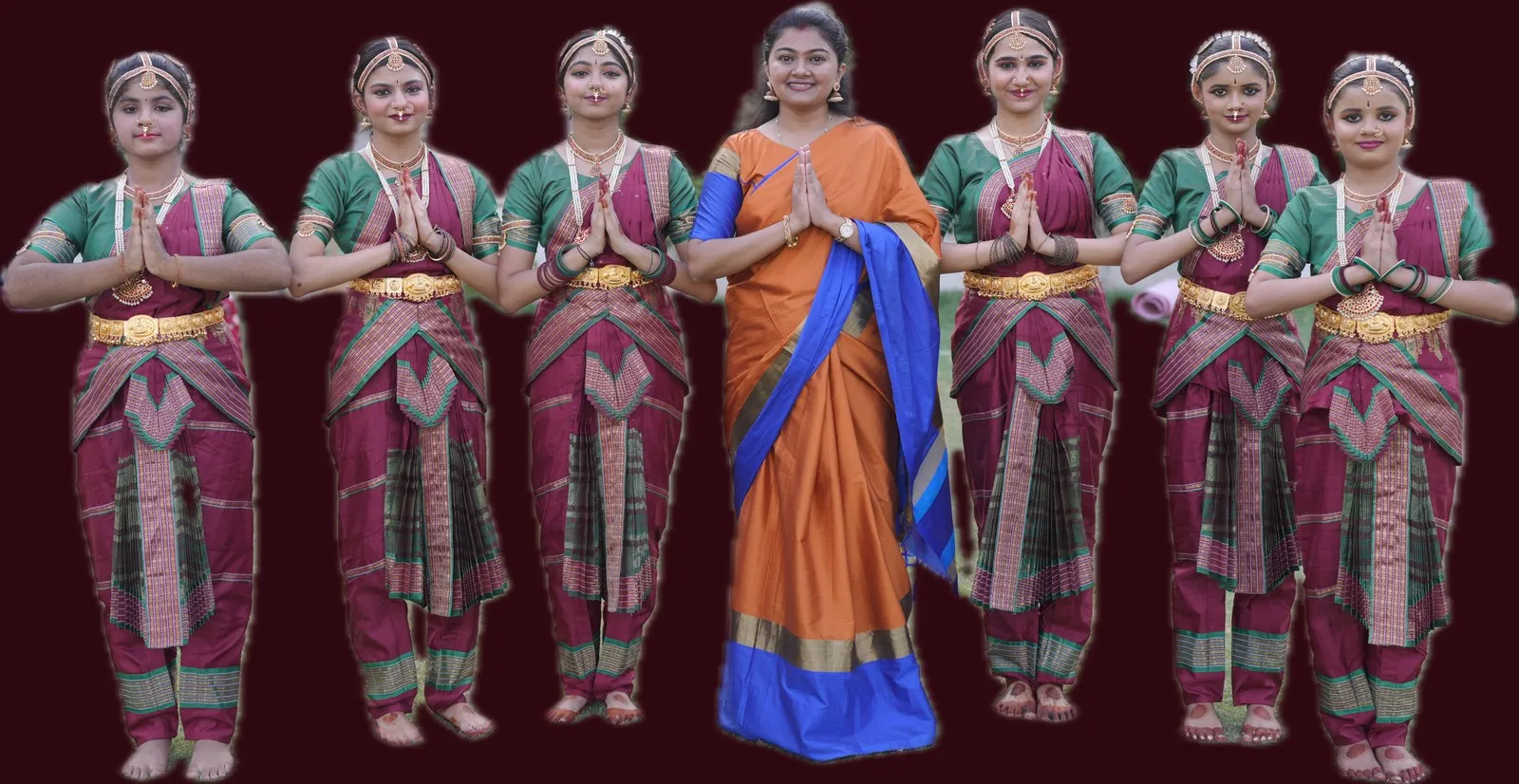
Practice begins and ends with a salutation to the earth and to the teacher — a small daily ritual of respect.
-
Shared across generations
Many parents learned as children. For a family, the dance becomes something shared between them.
What students can achieve
Bharatanatyam is learned in stages, through a graded examination system. Each milestone is earned over years.
-
First classes
Aramandi, the first adavus, hastas and basic theory — the foundation everything else is built on.
-
Prarambhik the beginning
The first graded exam: the foundations, examined by the board.
-
Praveshika the entrance
A wider vocabulary of adavus and a first step into repertoire.
-
Madhyama the middle
Longer pieces, more expression, deeper theory.
-
Visharad the proficient
The advanced level, usually described as equivalent to a bachelor's degree — typically around seven years in.
-
Alankar the ornament
The post-graduate level, equivalent to a master's. Our guru, Binni Patel, holds Alankar with distinction.
Beyond the certificates
-
Arangetram
A dancer's solo debut: a full-length performance, usually after seven to ten years of training. Kalika Nrityalay opened in 2021, so our students are still on the road to theirs — which is exactly why we care so much about the foundation.
-
Performing
Every performance, from the living room to the stage, builds poise and nerve.
-
Teaching
With advanced qualifications, some dancers go on to teach. Binni Patel opened Kalika Nrityalay the month after completing Alankar.
-
A practice for life
Bharatanatyam isn't an activity to outgrow. Many dancers keep training, performing and learning well into adulthood.
How the levels and the arangetram fit together: Bharatanatyam exams explained.
Pandanallur bani — geometry you can see.
Keep reading
- How to choose a Bharatanatyam teacher for your child
Lineage, qualifications, batch size and what to watch for in a trial class — a practical guide for parents choosing a Bharatanatyam teacher.
- Online or in-person Bharatanatyam: which suits your child?
An honest comparison of learning Bharatanatyam online and at a studio — what each does well, what online can't do, and how to set up at home.
- Bharatanatyam exams explained: Prarambhik to Alankar
What the graded Bharatanatyam exams are, what each level means, how long the path takes, and how exams differ from an arangetram.
Start with the foundation.
In the USA or Canada
Live online classes on Saturday and Sunday mornings, your time. Your first two classes are free.
Book your free classes