
The graded path
Bharatanatyam is taught through a graded examination system — Prarambhik, Praveshika, Madhyama, and Visharad, followed by Alankar. It typically takes years to move through. Here is where every student begins.
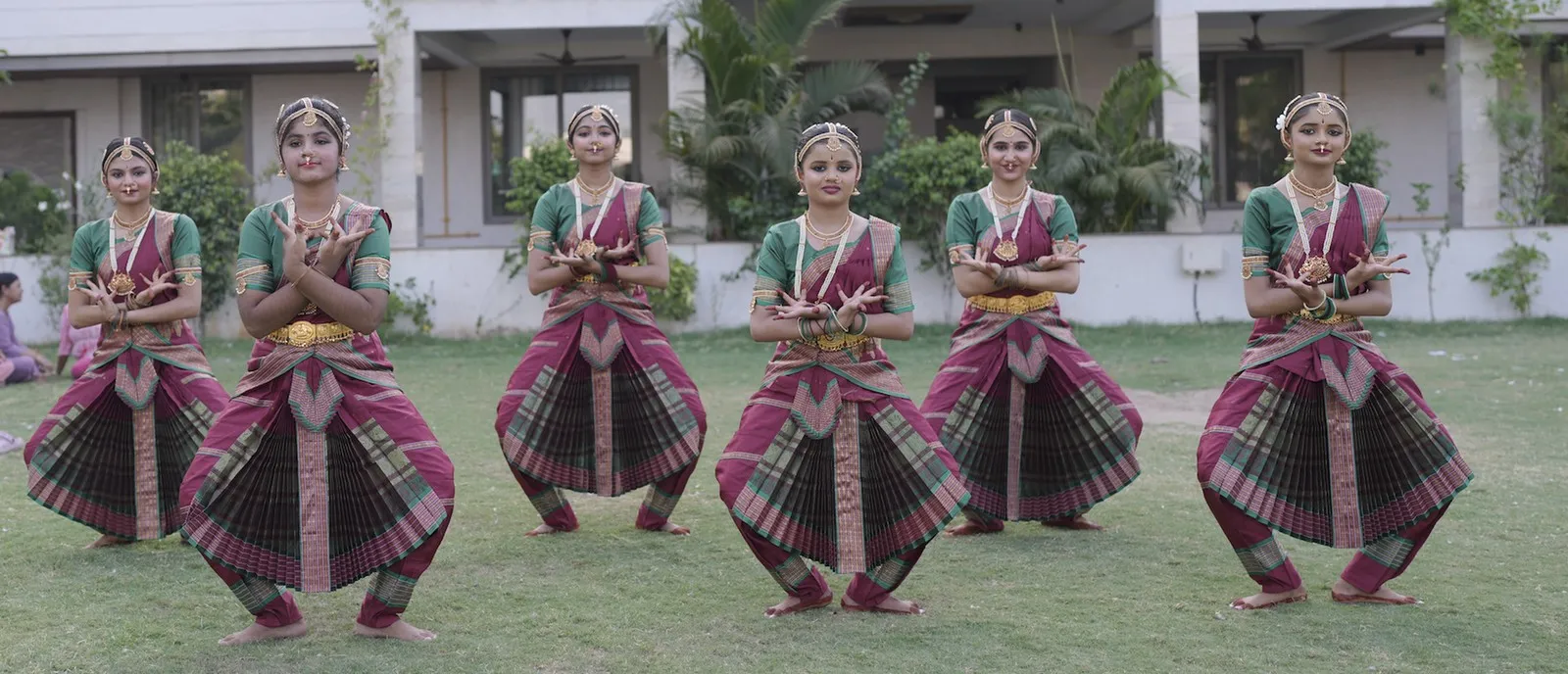
Six students in true aramandi — turned-out, symmetric, grounded. This is the technique proof.
Year one
-
Aramandi
The grounded, turned-out half-seated stance that underlies almost every Bharatanatyam movement — the first thing every student learns, and the thing a trained eye checks first.
-
The first adavus
The basic units of movement that combine, later, into full choreography. Built slowly, with correct footwork and rhythm before speed.
-
Hastas
The vocabulary of hand gestures used throughout the dance, learned individually before they're combined with movement and expression.
-
Basic theory
The rhythmic and structural fundamentals underneath the movement — taught alongside the physical practice, not as an afterthought.
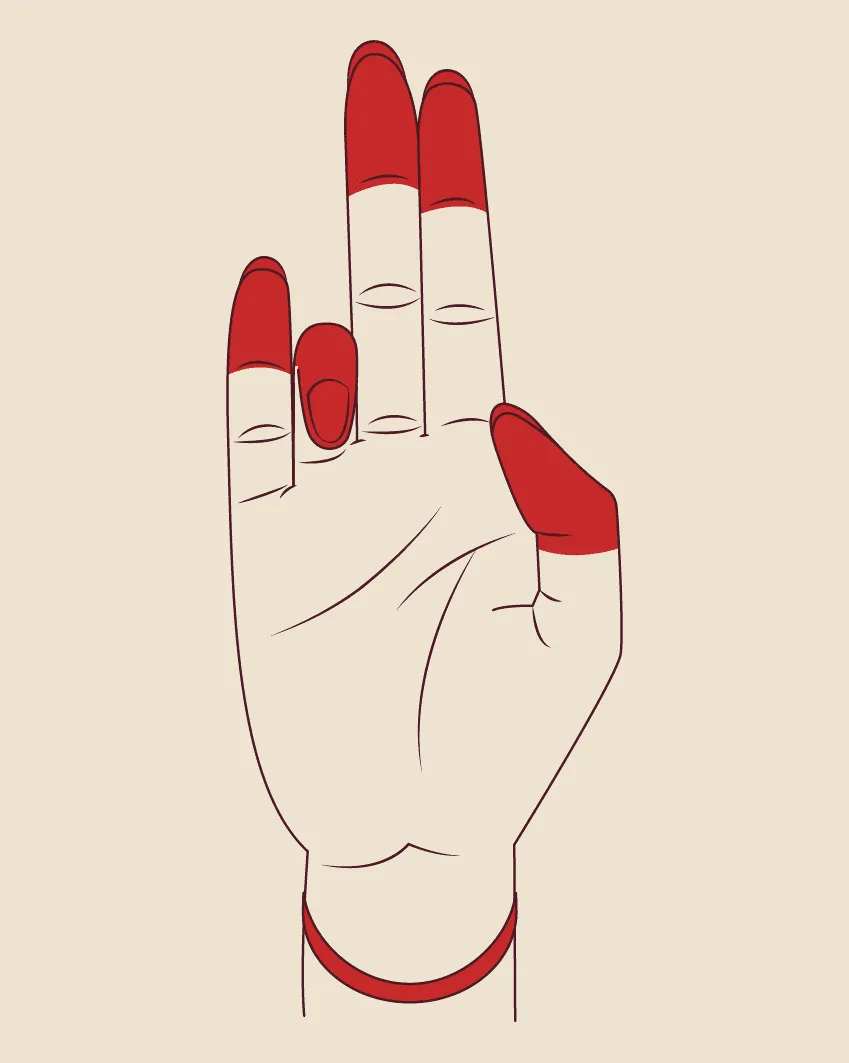
Tripataka mudra
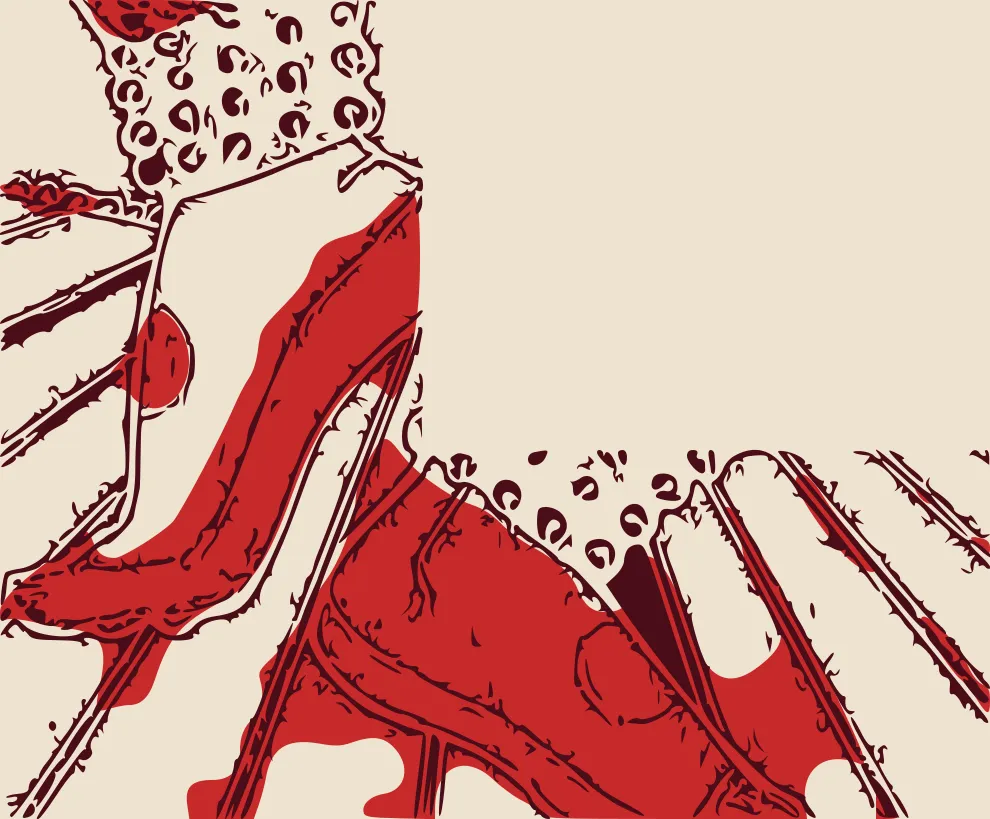
Salangai
How the levels fit together, and how exams differ from an arangetram: Bharatanatyam exams explained. Or read about what children gain from Bharatanatyam.
Start at the foundation.
Your first two classes are free — come see how Year One begins.